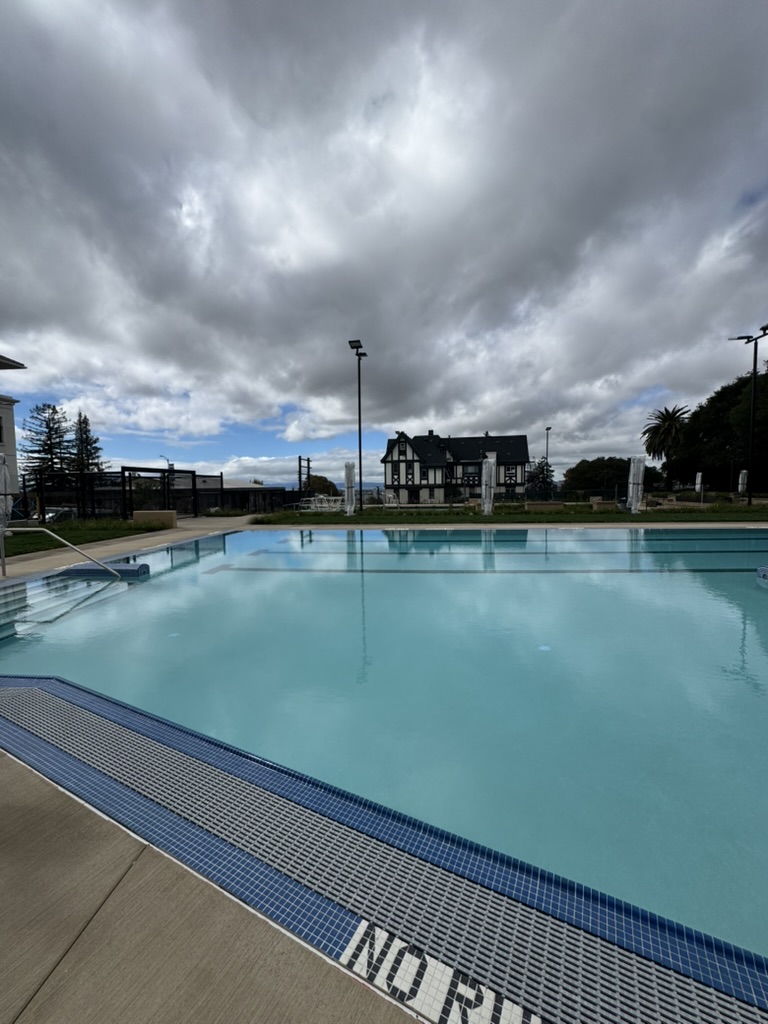
Piedmont Community Pool
Outdoor audio, underground cabling, and perimeter security work at Piedmont Community Pool, including long underground runs, specialty cable selection, gate-device installation, and stop-and-go coordination across an extended project schedule.
Piedmont was a long, stop-and-go project completed largely in an outdoor pool environment. The work moved in phases depending on what other trades had finished, what was ready for access, and when RFIs or field delays were resolved. That meant the job was less about one continuous push and more about returning to the site repeatedly, picking up the next available scope, and keeping the overall installation organized as conditions changed.
I worked on this project with Jeff. Early on, a major part of the scope involved speaker installation and the supporting cable pulls around the pool facility. Because so much of the job was outside, the work had to account for weather exposure, long pathway distances, and equipment choices that would hold up in a more demanding environment than a typical interior AV project.
There were also several devices on this job that were new to me at the time, but they were close enough to equipment I had already worked with that the learning curve was not dramatic. The important part was being able to read the device, understand its intended use, land it correctly, and keep moving without treating every unfamiliar model as a major obstacle.
Outdoor Audio And Cable Staging
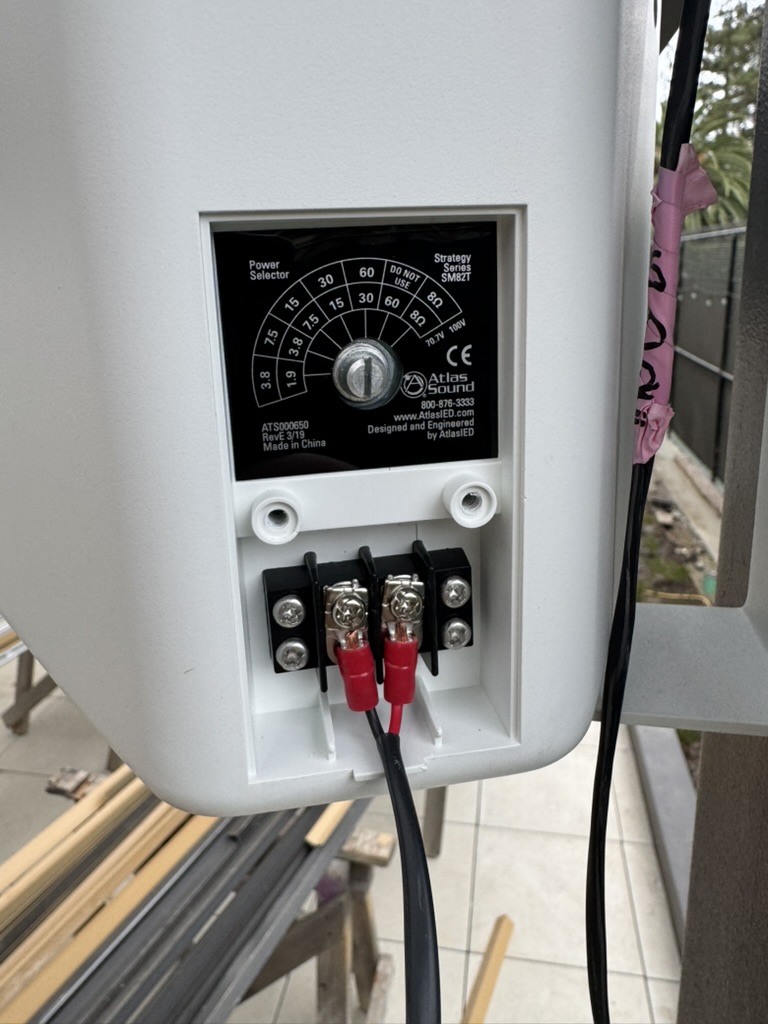
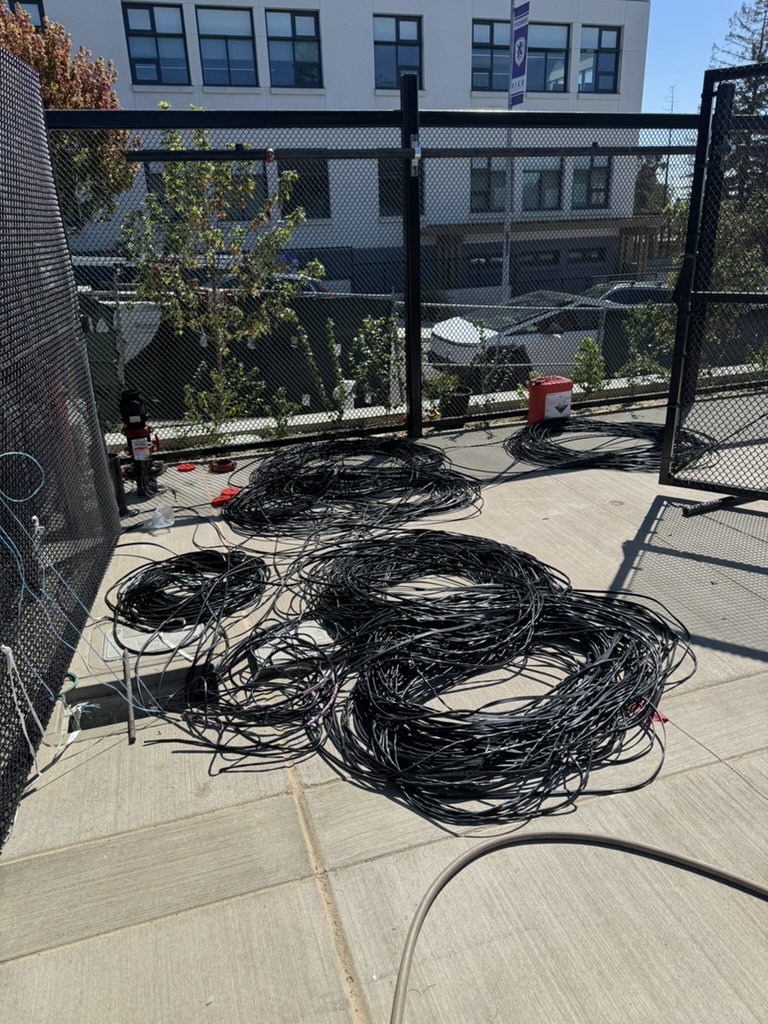
The early audio scope centered on installing and wiring speakers for the pool environment while Jeff and I pulled and staged the supporting cable throughout the site. Because of the distances involved, cable organization mattered. The work had to stay clean enough that each return visit could pick up where the last one left off instead of wasting time sorting through previous pulls.
This was a good example of field execution that was not especially complicated in theory, but still required discipline in practice. Outdoor work around a pool leaves less room for sloppy staging, weak terminations, or assumptions about what will remain dry and protected over time.
Outdoor speaker work and staged cable pulls
Underground Runs And Cable Integrity
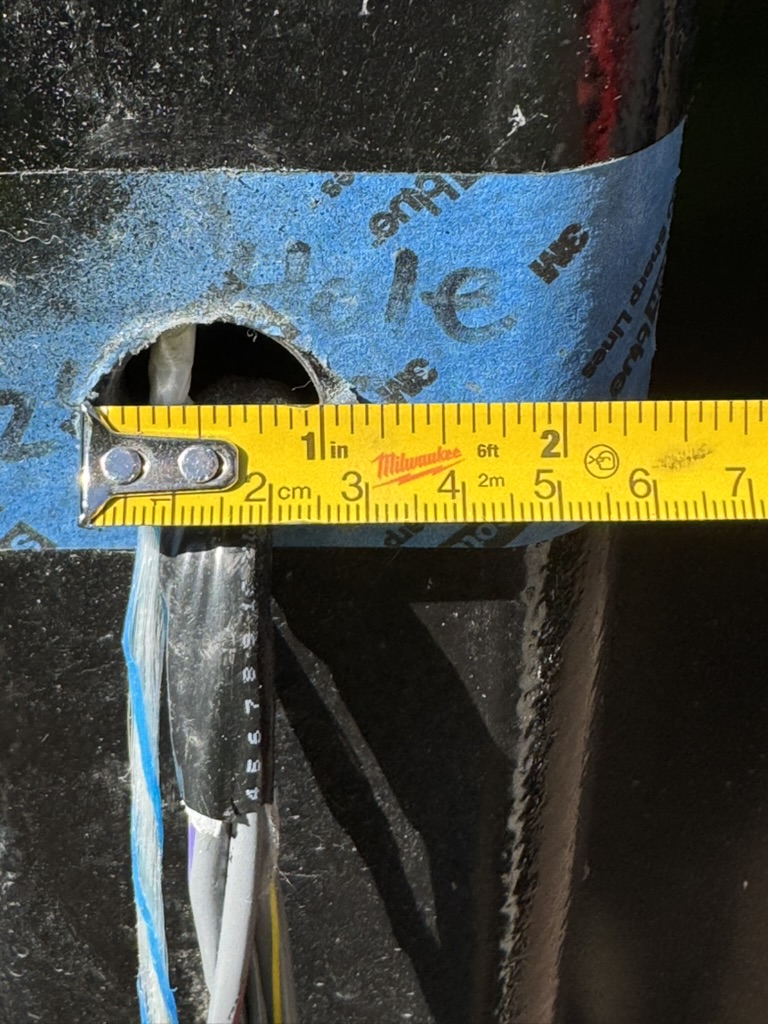
One of the more important field issues on this project came from the underground runs. We had reason to believe that some of the PVC pathway installed by the electricians had been compromised, which meant water was likely entering sections of pipe. That changed the problem from a normal pull into a long-term reliability question.
Instead of treating the pathway as if it were dry and stable, we had to plan around the possibility of moisture intrusion and make sure the installed cable would hold up for the customer over time. That required procuring and using specialty underground-rated cable rather than relying on a standard assumption that the pathway itself would provide all the protection.
This kind of issue is a good example of why field work is not just installation. It also involves recognizing when the environment does not match the drawings, identifying the actual risk to the customer, and adjusting the material choice before the problem becomes someone else's failure later.
Underground pathway conditions and cable selection
Gate Security And Perimeter Devices
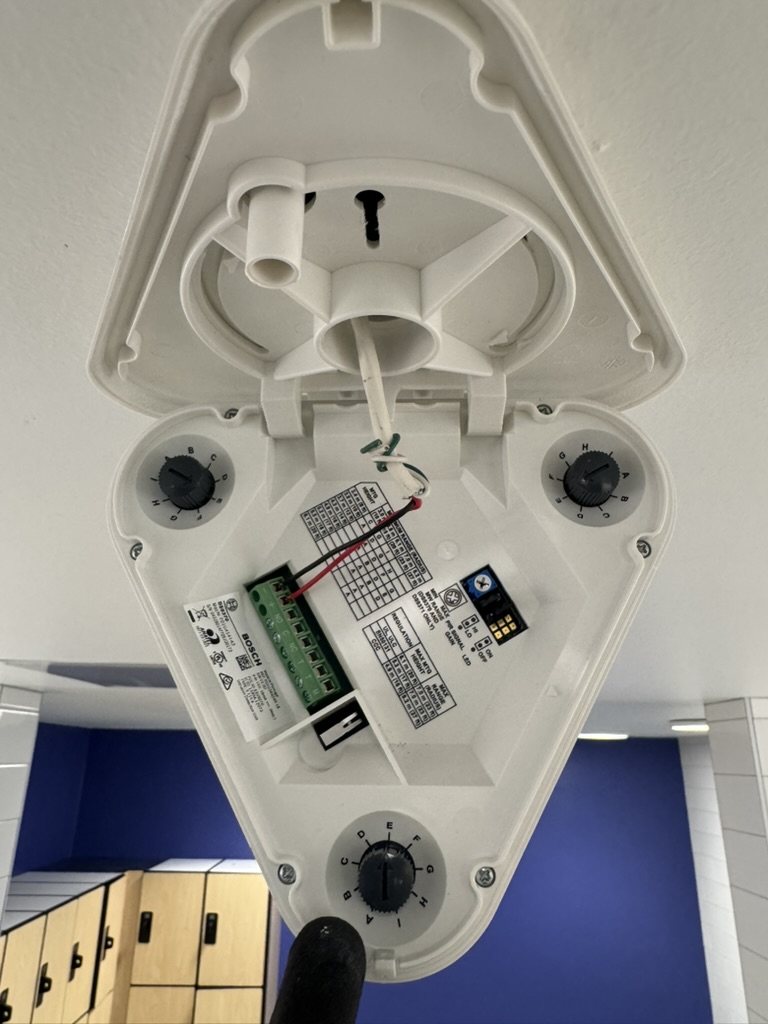
In addition to the audio scope, Jeff and I also handled security-related work at the perimeter gates. That included drilling, routing cable, mounting gate devices, running some of our own conduit, fastening supports with brackets, and testing card-access functionality around the site perimeter.
Part of that work involved documenting device information as equipment was installed so the system could be tracked cleanly. There were also devices in this scope that were new to me, including sensor hardware, but the task was still straightforward because the underlying process remained the same: understand the device, land it correctly, and verify operation before moving on.
The project timeline made this security work more drawn out than it would have been on a faster-moving site, but it still came together well. A large part of the value on this job was being able to return to partially complete areas, re-orient quickly, and finish the next piece of scope without losing continuity.
Perimeter access and supporting device installation
Finished Site
By the end, the project resolved into a well-finished pool environment with integrated audio and perimeter security across a site that had taken shape gradually over a longer timeline. The work itself was not defined by one dramatic technical challenge as much as it was by consistency: adapting to changing site conditions, returning to unfinished areas, and still delivering clean, durable field execution.
Completed pool environment