Yountville Veterans Home
Large multi-wing AV and paging installation at the Yountville Veterans Home, including distributed paging infrastructure, speaker installation and testing, classroom and first-floor rack build-outs, dining hall coordination, chapel change-order work, and backbone TV support across a five-story facility.
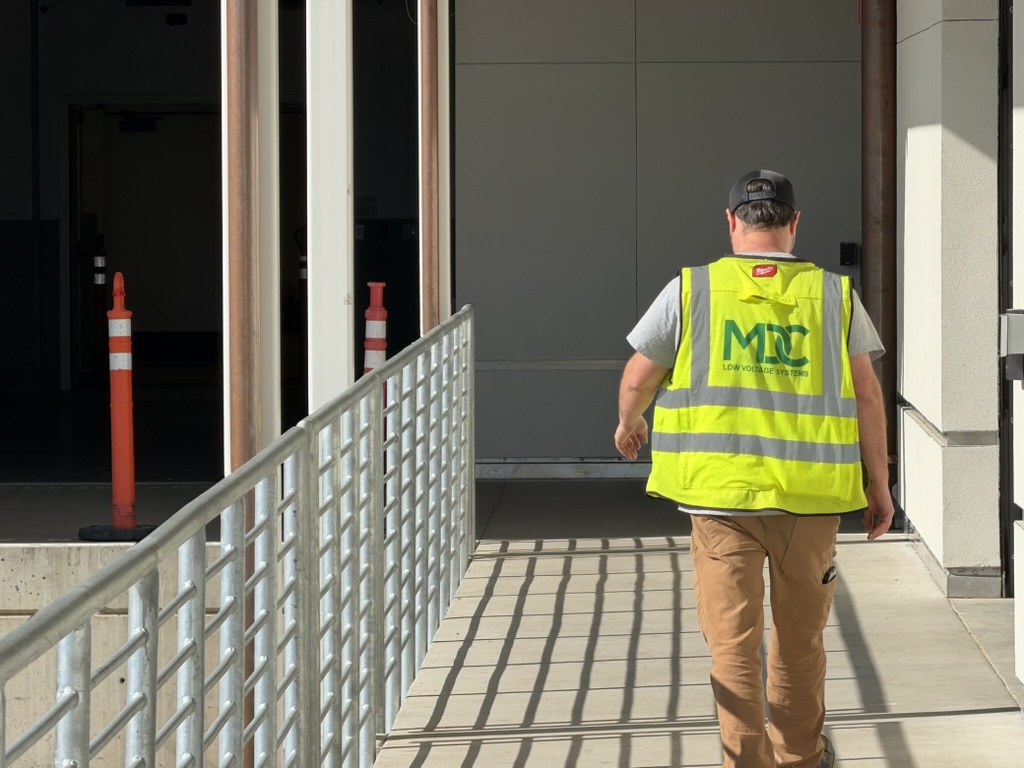
This was one of the larger jobs I worked on at MDC and one that extended over a long period of time. Dan led the project, and I worked with him across a broad range of scope as the building came together. The facility is a five-story building organized into three wings, and the work touched nearly every part of it in some form.
At a high level, the project included speakers, paging infrastructure, floor-by-floor rack build-outs, classroom-related systems on the lower levels, backbone TV support, and the usual long sequence of cable installation, terminations, testing, and follow-through that comes with a large prepared site. The job was not especially hard from a troubleshooting standpoint, but it was large, repetitive in places, and broad enough that organization mattered just as much as technical ability.
Overall Scope And Field Execution
Much of the project came down to repetition at scale. On the patient-care floors, the main scope was the paging system running through the hallways rather than inside each individual room. That still meant a large amount of cable pulling, speaker installation, termination, and later the testing of every speaker across every floor.
Because the building was spread across five floors and three wings, the work demanded consistency. On a project like this, the challenge is not inventing a new solution in every space. It is executing the same standard repeatedly without drift, keeping the installation organized, and making sure the system is still clean and testable when the job size starts to compound.
First Floor Public Spaces, Classrooms, And Shared Areas
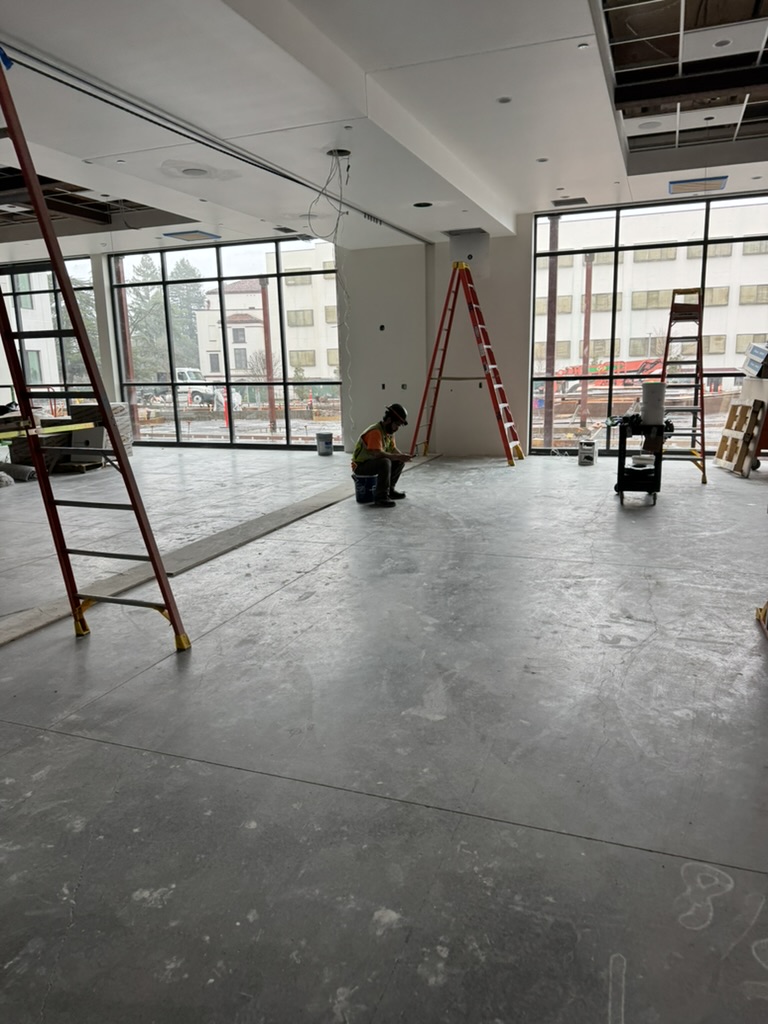
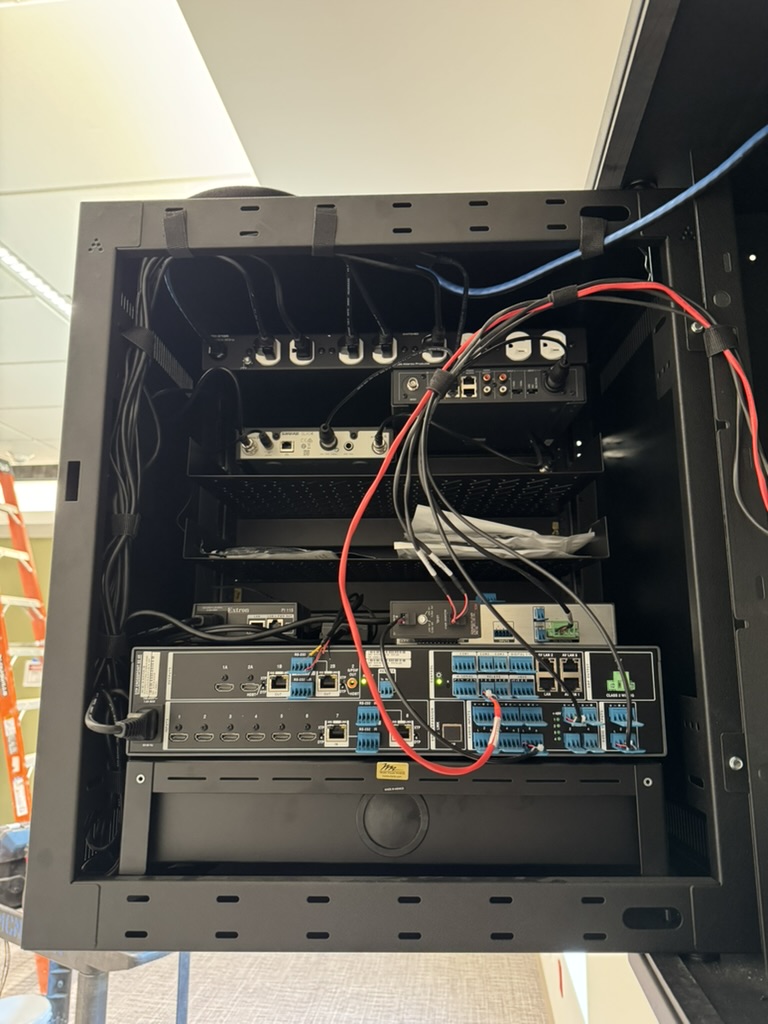
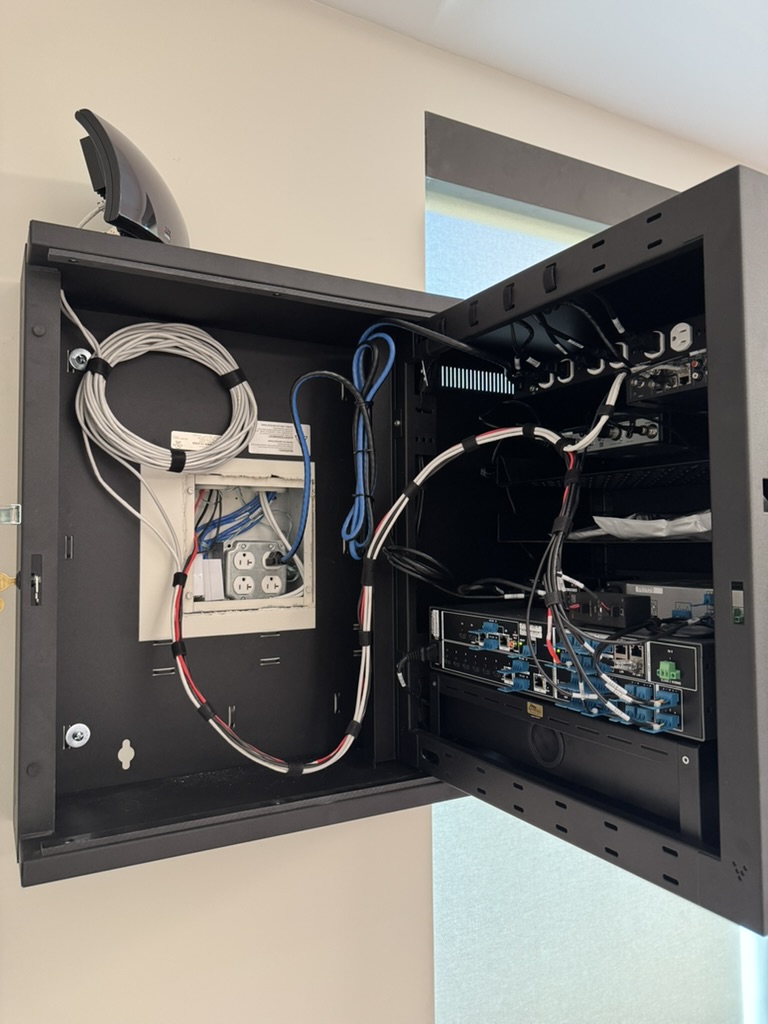
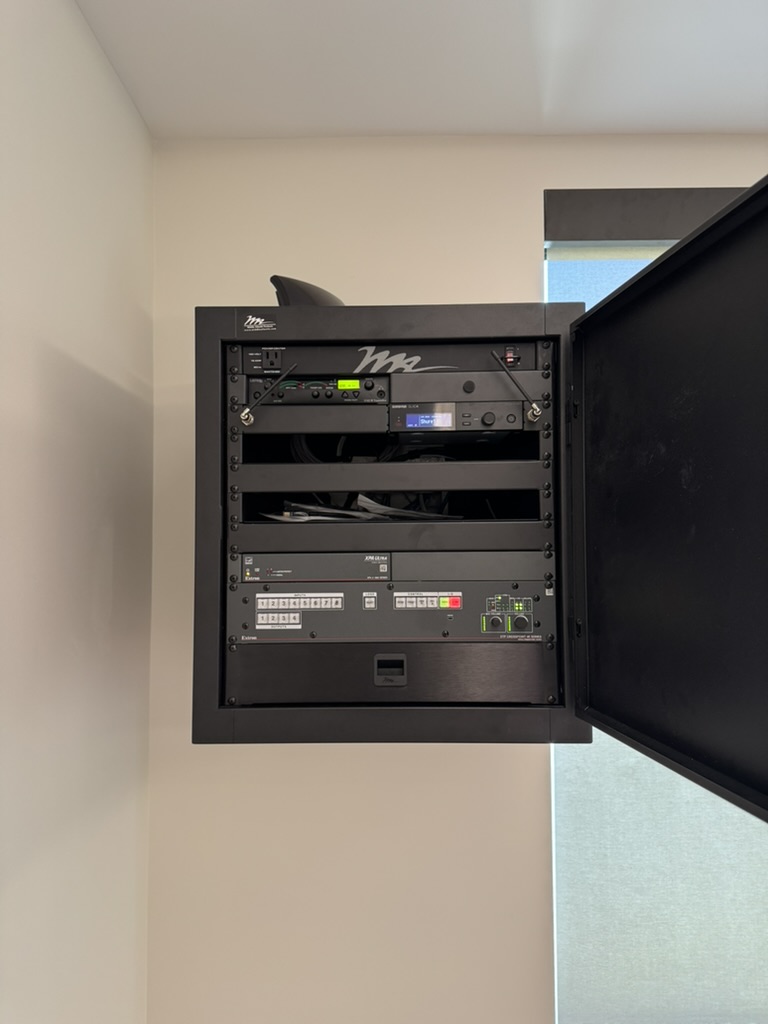
The first floor carried a heavier mix of scope than the upper hospital levels. It included dining, classrooms for residents, offices, bathrooms, and a chapel, all of which required their own infrastructure decisions and support systems. The classroom areas received dedicated racks that Dan and I built out together, and we also ran cable associated with a separate antenna-related system that tied into the broader building infrastructure.
The first floor is where the project showed more of its variation. Instead of purely repetitive hallway paging, we had to work through individual spaces with different requirements, different access conditions, and different expectations for how the systems would be supported and presented.
Dining Hall And Chapel Coordination
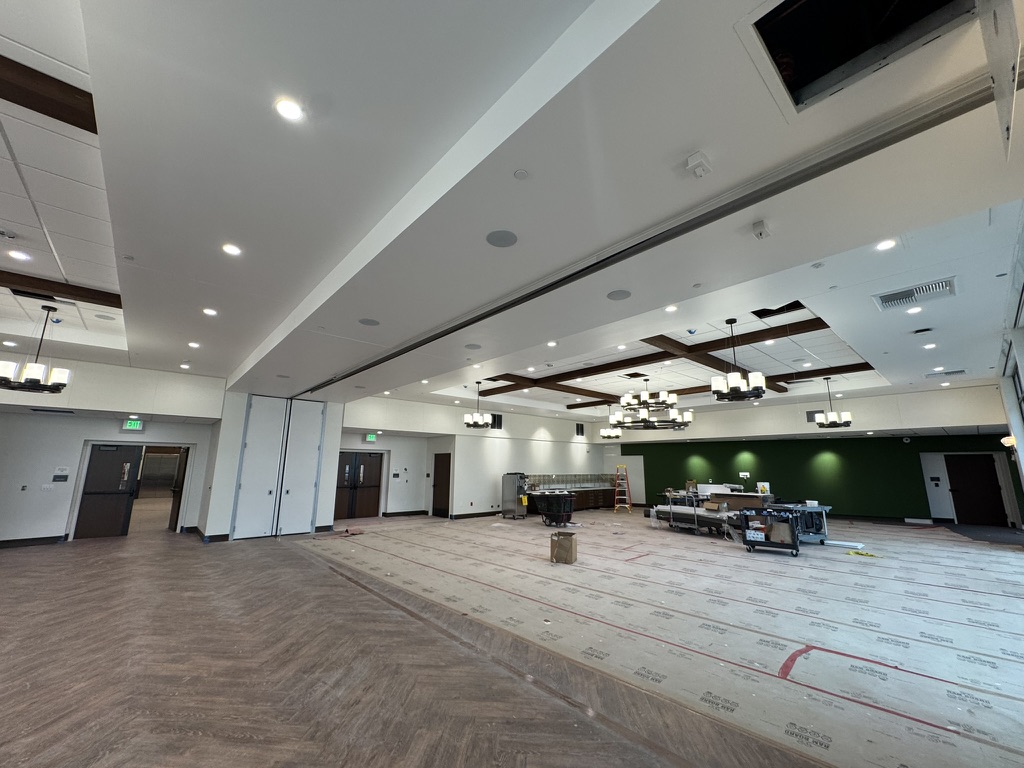
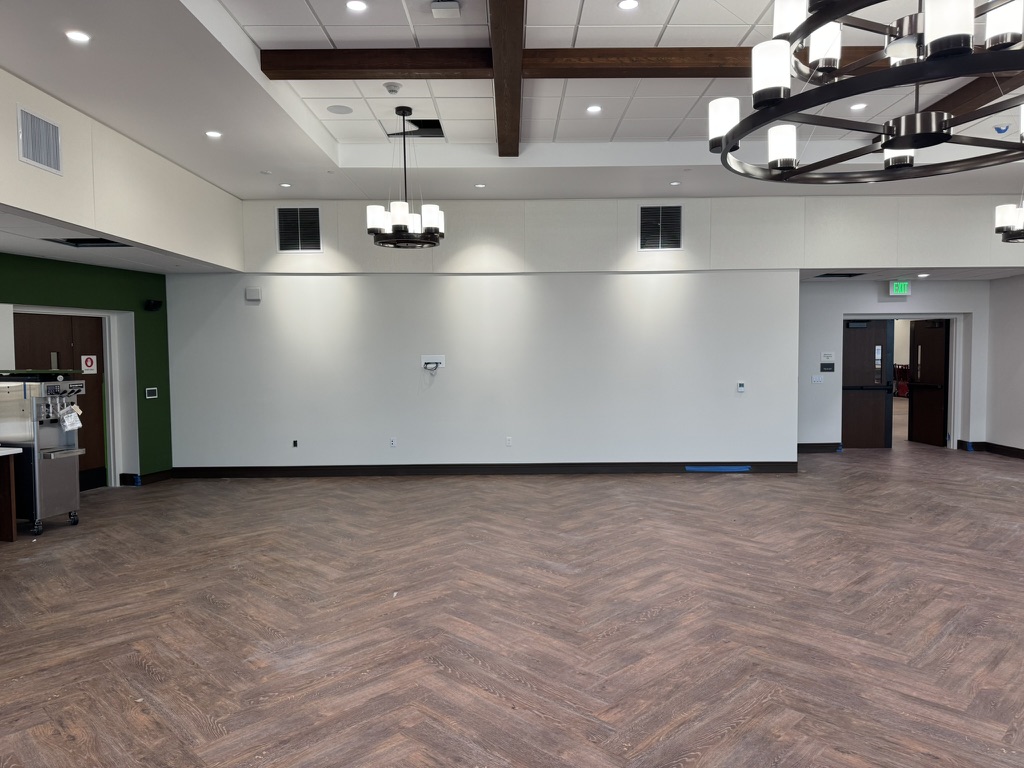
The dining hall was one of the more awkward areas in the building. At one point we were effectively buried on placement, which meant working back through the GC to identify where the speakers could actually go and then cutting that scope back in. The ceiling in that space was high enough that we were working from tall ladders rather than lifts, which made the cable routing and support work slower and more physical than it would have been in a more accessible room.
That area also required practical field adjustments to support the speakers correctly, including working through what could be done with the available structure and using wood to make the installation land properly. The chapel had its own change-order issue tied to support structure because a large HVAC element interfered with the original mounting approach, so the job there became less about routine installation and more about working out what could realistically be built.
These were not impossible problems, but they are good examples of the kind of friction that shows up on large jobs. Even when the core system is straightforward, one or two spaces can still require a lot more coordination than the rest of the floor.
Upper Floors And Distributed Paging
The second through fifth floors were more repetitive than the first floor and were essentially hospital floors for most of the project scope. The main work there was the hallway paging system rather than room-by-room AV. That still translated into a large amount of labor: cable runs, speaker installation, support work, terminations, and then testing every single speaker across each level.
This part of the project was a strong example of large-scale field execution. It was less about solving a different puzzle on every floor and more about maintaining the same quality standard across a high volume of repeated work so the paging system remained consistent from wing to wing and floor to floor.
Backbone Systems And Equipment Rooms
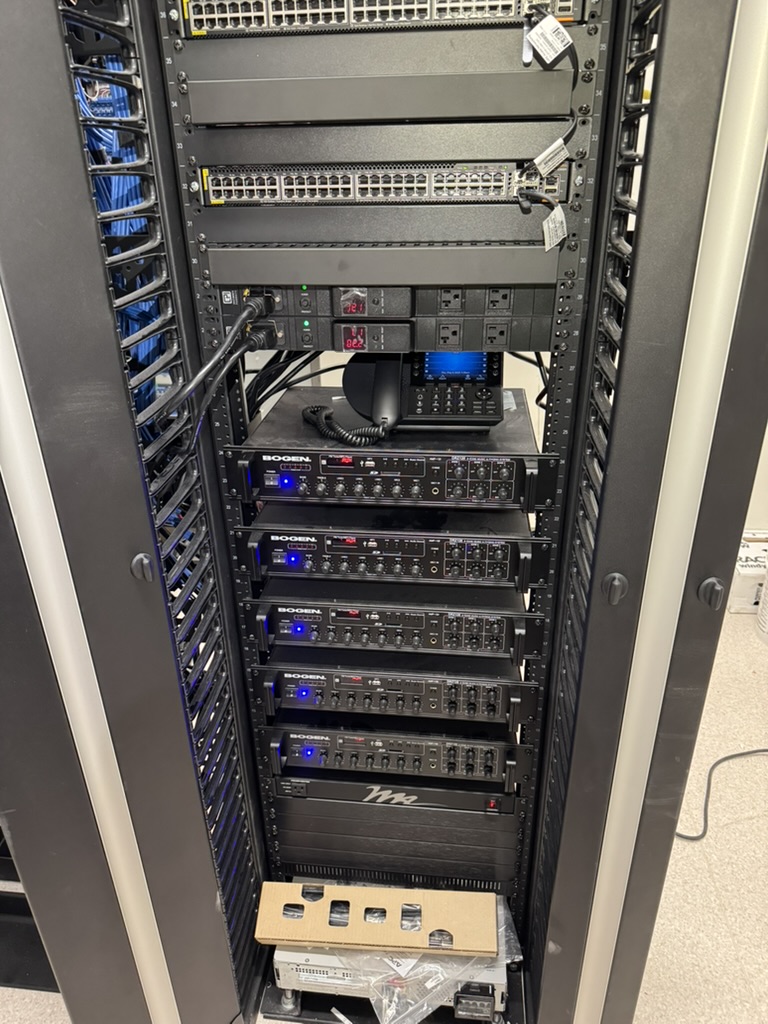
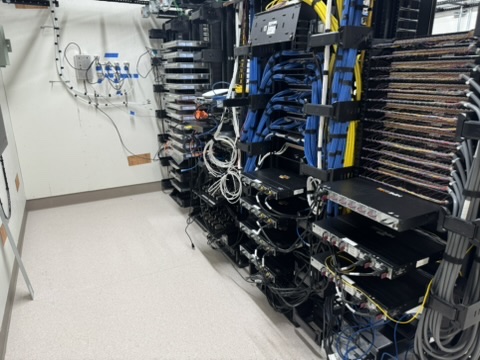
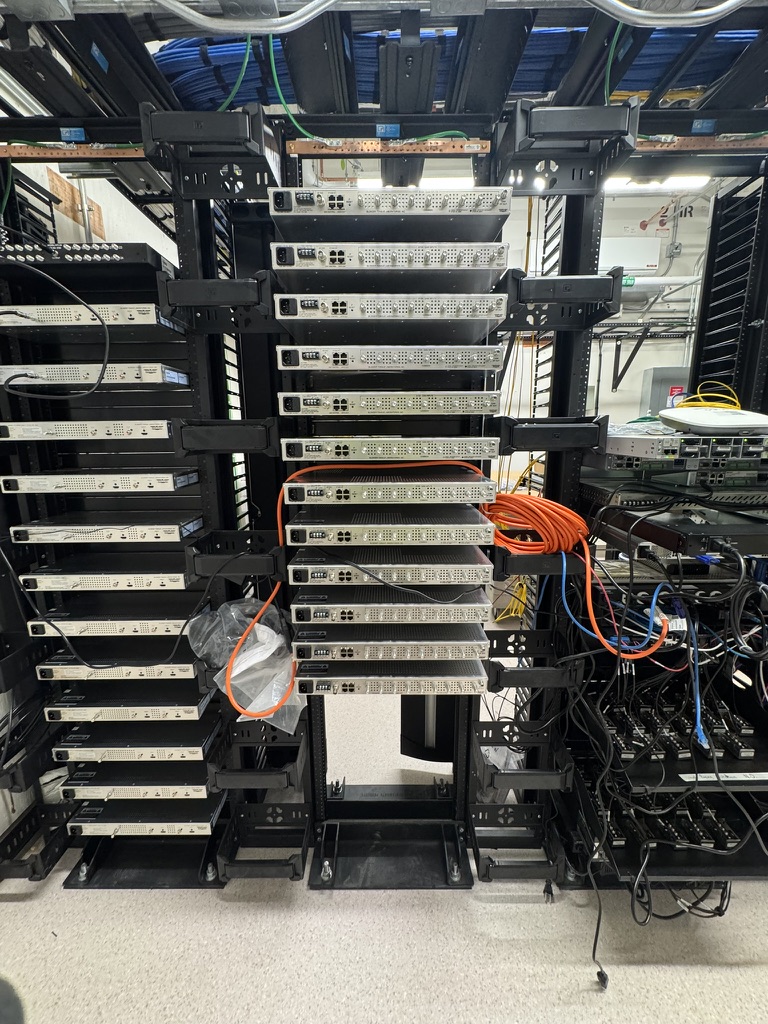
Beyond the distributed speaker and paging work, the building also included backbone TV and headend-related infrastructure that had to be integrated into the broader system. That added another layer to the project because it was not just field speaker work in finished spaces; it also involved supporting the back-end equipment environment that made the building-wide systems function as a whole.
The equipment rooms and rack environments were not the flashy part of the job, but they are where a lot of the project's operational weight lives. Large buildings only stay manageable when the back-end infrastructure is organized, scalable, and maintainable.
Overall, this project stands out less because of one especially difficult technical problem and more because of its size, duration, and breadth. It required staying steady across repetitive paging work, adapting in the spaces that were less straightforward, and carrying a five-story, three-wing building from rough system installation through testing and rack completion in a way that stayed organized all the way through.